


When one thinks of cricket, images of grass-stained whites and fiercely competitive matches immediately spring to mind. But what about the thrill of watching a ball whizz past the batter’s nose, leaving them ducking for cover? Fast bowling captures the essence of cricket’s excitement, and everyone wants to know: who’s the world fastest bowler? In a sport rich with skill and tradition, the name that stands out ignites debates among fans and players alike. Let’s jump into the world of fast bowling, where speed meets strategy.
Introduction to Fast Bowling
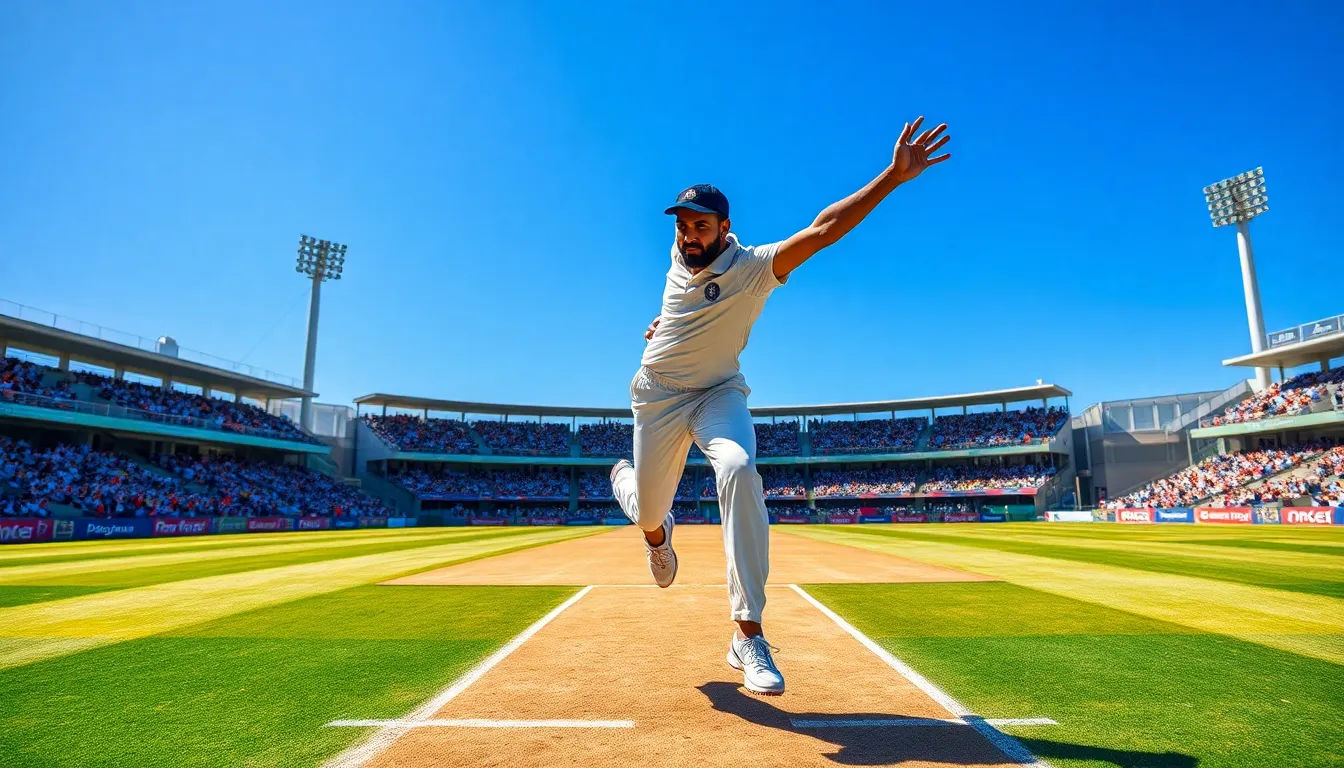
Fast bowling is more than just a technique: it’s an art form. The bowler’s ability to generate pace, combined with precision, creates a lethal cocktail designed to unsettle even the most skilled batsman. With speeds over 90 mph (145 km/h), these athletes are akin to sprinters on the cricket pitch. Over the years, they’ve developed various styles, yet all share a single goal: to deliver the ball with ferocity and accuracy. From the ominous run-up to the breathtaking release, each moment pulses with adrenaline. This section introduces the fascinated audience to the realm of fast bowling, where every delivery can change a game.
Historical Overview of Fast Bowling
The lineage of fast bowling stretches back into the annals of cricket history, unfolding like the pages of a well-worn book. In the early days of the game, bowlers focused primarily on length and direction rather than sheer speed. The introduction of the overarm action revolutionized the sport, heralding the dawn of the fast bowler. Pioneers like Sydney Barnes and Don Bradman’s nemesis, Frank Tyson, set benchmarks in the early 20th century, crafting a legacy that would inspire future generations. Fast forward to the late 20th century, and players like Malcolm Marshall and Wasim Akram were catapulting the sport into a new era, where speed became paramount, setting the stage for the legends of today.
The Contenders for Fastest Bowler
Currently, discussion about the world’s fastest bowlers typically centers around a select few titans of the game. Shoaib Akhtar, known as the Rawalpindi Express, rocketed the ball at an astonishing 161.3 km/h (100.23 mph) during a match in 2003, earning him the title of the fastest bowler ever. His unique approach made him a formidable presence on the pitch. Yet, competition is fierce: players like Brett Lee and Mark Wood are also in the mix, boasting speeds that have tested cricket’s records. As new talents emerge, the race continues, promising that the next record-breaking delivery could come from an unexpected source.
Records and Achievements in Fast Bowling
Records in fast bowling are not merely numbers etched in history: they are the benchmarks of skill and determination. Apart from Shoaib Akhtar’s lightning speed, it’s crucial to recognize other remarkable feats. Dale Steyn, revered for his swing and speed, holds numerous records, including the fastest to reach 400 Test wickets. Also, figures like Courtney Walsh and Glenn McGrath carved their names in record books with significant wicket-taking tallies. Fast bowlers have impacted matches, series, and even entire World Cups, showcasing how speed can evolve into a game-changing weapon.
The Science Behind Fast Bowling
Understanding fast bowling transcends mere admiration: it delves into the physics of speed, motion, and biomechanics. Elements like Newton’s laws of motion come into play each time a bowler launches the ball. The whip-like action of the wrist and the velocity generated during the run-up are pivotal in maximizing speed and control. Besides, the technique employed by bowlers can enhance their ability to reverse swing, an unpredictable aspect that can foil even the best batsmen. With advancements in sports science, athletes now analyze their techniques with precision, striving to push the limits of human capability on the cricket pitch.